Motorbike insurance in Ireland is a legal requirement for all riders to use public roads. It provides financial protection against damage, theft and liability for both riders and other road users.

There are various types of motorbike insurance, and the cost can vary widely – depending on the rider’s age, the bike, how it is used, and claims history. 

With Compare Insurance,  you can explore how motorbike insurance works in Ireland, how policies differ between providers, and what to look for when comparing cover.
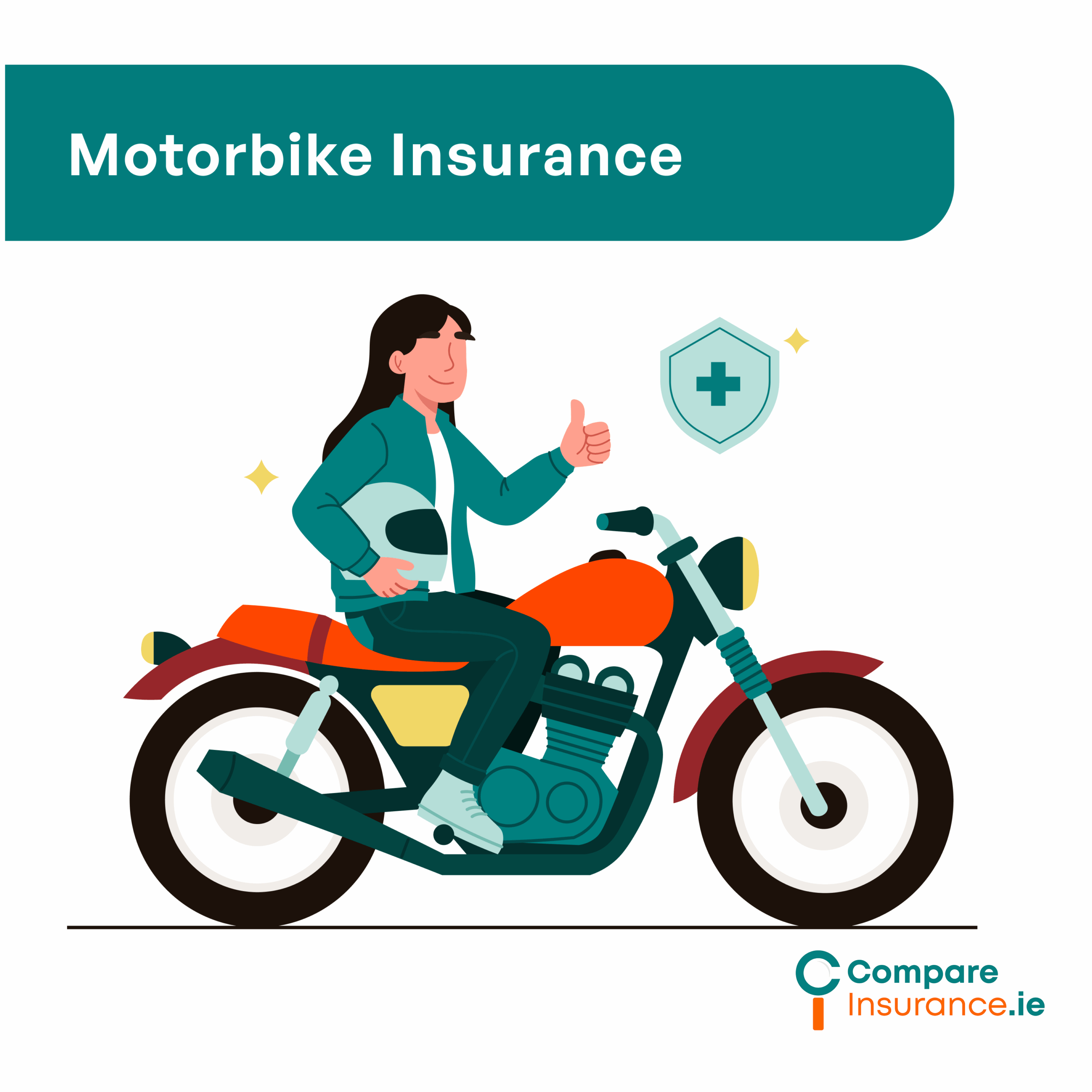
What is Motorbike Insurance Cover?

Motorbike insurance is a type of motor insurance which you must have to ride a motorcycle on Irish public roads. You pay a premium every month or annually to an insurance provider, who will then cover you financially if things go wrong.

Having motorbike insurance is not only a legal requirement, it also gives you peace of mind that you won’t have to break the bank if you are in an accident, your bike is damaged, or another unexpected issue arises. 

You should also note that to legally ride a motorcycle in Ireland, you must have Initial Basic Training (IBT), which is also a prerequisite for insurance.

What is Covered By Motorcycle Insurance?

Motorbike insurance covers a range of damages depending on the type of policy you take out. At a bare minimum, you must be financially covered for damage or injury caused to third parties.

Depending on the type of motorcycle insurance you opt for, providers may cover you financially for:

Common Inclusions (by policy type):

  • Third party property / vehicle damage
  • Third party injuries
  • Fire
  • Theft
  • Vandalism
  • Injuries to your person
  • Damage to your motorbike
  • EU/ UK short term travel
  • Motorcycle replacement
  • Driving of other motorcycles (third party cover)
  • Motorbike legal costs

Optional Extras (insurer-dependent):

  • Step back no claims discount (optional)
  • Personal injury cover
  • Breakdown assistance
  • Cover for accessories, helmet, and leathers
  • Cover for attendance at motorbike events
  • Loss of keys

Types of Motorcycle Insurance

There are three types of motorbike insurance in Ireland. The right cover for you depends on your personal needs and the amount you’re willing to pay.

Feature Third Party (TPO) Third Party Fire & Theft (TPFT) Comprehensive
Legal Road Requirement
Injury to Other People
Damage to Other Vehicles
Fire Damage to Your Bike X
Theft or Attempted Theft X
Accidental Damage (Your Bike) X X
Vandalism Cover X X
Step-back No Claims Protection Optional Optional (Often standard)
Helmet & Leathers Cover X Optional (Up to €1.5k)
Breakdown Assistance Optional Optional Optional (Often standard)
EU/ UK Travel
Events Optional Optional Optional
Personal injury cover Optional Optional Optional
Motorbike legal costs
Loss of keys Optional Optional Optional

Under the Road Traffic Act and EU law, all motor vehicles on public roads in Ireland must have at least third party motor insurance, which is the most basic of the three types of motorcycle insurance.

In the event of an accident where you are at fault, third party insurance compensates the other party or parties involved. Third party motor insurance does not cover personal injuries to you, or compensate for damage, fire or theft of your motorbike.

Third party fire and theft insurance compensates other road users involved in an accident where you are at fault, and it also covers fire and theft of your motorcycle. This is the most popular type of motor insurance in Ireland as it balances cost with protection for theft and fire, which are common motorcycle risks.

However, third party fire and theft insurance will not cover any personal injuries that you sustain in an accident or damage to your bike.

Comprehensive motor insurance for motorcycles covers injuries and damage sustained by third parties in an accident, while also compensating for fire, theft, damage to your vehicle and personal injuries you sustain. 

Many motorcyclists opt for comprehensive motor insurance due to the higher risk of injury as they have limited physical protection compared to drivers. 

Optional extras can include break-down cover, helmet cover and travel related cover in Europe.

Compare Motorbike Insurance

When making comparisons of motorbike insurance options in Ireland, there are many things that go into your decision-making process beyond the cost of the policy.

While the costs (premiums) of motorbike insurance may appear to be very close or even identical among many of the policies offered by Irish insurers, the coverage of the policies can vary significantly from one provider to another, particularly when considering the type of rider or bike being insured – these distinctions will affect your ability to file an insurance claim in the event you are involved in an accident.

What to Compare Between Motorbike Insurance Providers

  • Excess levels: How much you pay toward a claim can vary even when premiums look similar.

  • Helmet & gear cover: Limits and inclusions for helmets, leathers, and accessories differ by insurer.

  • No claims discount rules: Step-back protection may be standard, optional, or unavailable.

  • Learner permit & IBT acceptance: Insurers apply different rules for learner riders and engine sizes.

  • Engine size & bike type limits: High-performance, modified, or larger bikes may be restricted or loaded.

  • Optional extras: Breakdown cover, European travel, events, and riding other bikes vary in cost and availability.

Comparing Providers

There are fewer options for motorbike insurance in Ireland compared to vehicle insurance, because there are fewer specialist insurers available, including AXA and RedClick. These specialists will have their own methods for calculating costs, who they insure, and what types of features (e.g., roadside assistance, helmet replacement) are included on their respective insurance policies.

For example, two people riding the same bike who have the same qualifications could be quoted vastly different prices or terms for the exact same coverage.
The best way to get the right coverage is to compare each option side-by-side based on policy details (and not just price), to make sure that you are both legally covered, and also that your specific riding style and location is also fully covered.

Factors that Affect the Cost of Motorbike Insurance

There are many factors that affect the cost of motorbike insurance in Ireland, such as:

The cost, make and model of your bike will be taken into consideration when calculating the cost of your motorbike insurance. A powerful superbike with a large engine will cost more to insure than a 50cc moped.

Your age plays an important role in how insurance providers assess risk, i.e. the likelihood of you making a claim. 

Younger motorcyclists pay more than older riders, however the initial cost will decrease as you build your no-claims history (assuming you are not involved in any accidents).

Insurance providers will take where you live into account before providing a quote. A rider in rural Galway will typically be quoted a lower premium than someone living and parking their bike in central Dublin.

Another risk factor that insurers will look at is your job. Motorcyclists who use their bike for work will likely be on the road much more than those who don’t, and may be quoted a higher premium as a result. 

Various roles are also priced differently, depending on their risk profile, a delivery driver or courier is likely to pay the highest premium.

How much you will pay in motor insurance is highly influenced by your no-claims history. Insurance companies offer no-claims bonuses to motorists to discourage claims and to reward responsible riding and driving.

How Much Does Motorbike Insurance Cost in Ireland (2026)?

The cost of motorcycle insurance in Ireland is typically between €350 and €1,000, however first year insurance for young riders with certain bikes could pay up to €4,000. 

Shopping around and comparing insurance premiums with Compare Insurance is highly recommended to get the best deal available.

How to Reduce the Cost of Motorbike Insurance

To reduce the cost of motor insurance, compare the many options available and decide on the level of insurance that suits your personal needs.

The best way is to ride safely and begin to build a long no-claims history. Those who have claimed in the past will pay more to insure their motorbike.

Lower Costs with Advanced Skills Tests

Advanced skills assessments can also significantly reduce premiums. AXA offers a 20% discount to those who take its ‘Test Drive’ which assesses your driving skills.

This 45-minute test is available to existing customers aged 17 to 24 years of age who have a full licence or a learner permit. 

Expert Tip

In Ireland, you cannot insure a bike without a valid Learner Permit and proof of IBT (Initial Basic Training). If you are a young rider or a ‘Born Again’ biker, completing an Advanced Skills Assessment can reduce your 2026 premiums by up to 20%.

Lower Costs with Advanced Skills Tests

Having a car insured along with your motorbike is another way to save money on bike insurance premiums. Some providers offer what is called a ‘6-Wheel Discount’ if you have an active car insurance policy, with higher discounts for those who insure their car with the same provider. 

A 6 wheel discount can lower your motorbike insurance quote by up to 40%, provided your car driving history proves your experience and responsibility on the road.

Specialist Cover for Unique Riding Needs

Classic motorbike insurance offers financial protection to those who have a classic motorcycle. 

Those with a classic bike often take extreme care of their vehicle, and they are often used for special trips, exhibitions and weekenders. Insurers should take your classic bike’s make and model into consideration when offering a quote.

Third party insurance is usually not recommended for classic motorcycles – it’s worth the extra in the event of fire or theft.

Although quadbikes are often used on private dirtroads, quadbike insurance is legally required to ride on public roads. At a minimum, third party motor insurance is needed if you ride your quadbike on any public road to cover the cost of third party injuries and damage in the event of an accident. 

Young driver motorbike driver insurance is a category of insurance that applies to motorcyclists aged between 17 and 24. 

These riders are considered to be at a higher risk of accidents by insurance providers and many are insuring their bike for the first time, meaning premiums can be significantly higher for young motorcyclists.

High performance and sports bikes must be insured if they are used on public roads in Ireland. Like other forms of motor insurance, those with a sports bike must have at least third party insurance.

However, as these bikes can be more expensive and as there is a greater risk of injury, many high performance riders opt for comprehensive insurance to be fully covered if anything goes wrong.

Some insurance providers offer multi-bike insurance policies for those with more than one motorcycle. As each vehicle must be insured, these policies allow you to cover all of your bikes on one policy, making it easier to renew and removing the hassle of insuring each vehicle every year. 

Those who opt for multi-bike insurance can also make significant savings as insurers offer discounted premiums for those who wish to insure more than one motorcycle.

Classes of Motorbike Use

Motorcycles are a versatile, thrilling and flexible way of getting from A to B, and can be used for a variety of purposes. You must tell your insurer how you intend to use your motorbike, which will affect your insurance quote – incorrect declared use can invalidate claims. In Ireland, you must display your insurance disc on your motorcycle. This contains basic information such as your policy number and the insurance policy’s expiry date.
General motor insurance policies for motorcycles will cover social, domestic, and pleasure use. This includes general riding on public roads.

Social and Commuting insurance covers social use as well as travelling to and from your place of work or study, covering you in the event of an accident.

Insurance for business motorbike use is for those whose motorcycle is used as part of their job, for travelling to meetings or different work locations. This doesn’t usually include delivery riders, who are covered in a separate category.

Delivery riders must be insured with insurance for delivery on motorbike usage. Delivery riders who use a motorbike to pick up and drop off deliveries such as food often spend hours on the road each day, which makes this type of insurance more expensive than others.

Motorbike Insurance FAQs

Yes, engine size affects the cost of motorbike insurance in Ireland. Bikes with larger engines cost more to insure due to their higher top speeds and repair costs. 

Sidecars must be declared to your insurance provider who will include this in  your insurance policy.

If someone else is insured under your policy or covered in an extension, they can ride your motorbike and will be covered in the event of something going wrong.

Your car’s no claims bonus will generally not affect the amount you pay for motorcycle insurance. However, some providers offer six-wheel discounts, which take your driving history into consideration and can offer up to 40% off your insurance quote.

Motorcycle insurance can be expensive in Ireland due to a high risk, theft and limited competition in the insurance sector.

Rider experience typically affects insurance costs with more experienced riders paying less than less experienced and younger motorcyclists.

Yes. Under Central Bank of Ireland rules, insurers cannot charge renewing customers more than they would a new customer for the same risk profile. This makes 2026 the best year to compare, as ‘loyalty penalties’ have been strictly reduced.

Yes, your location and where your motorcycle is stored can affect premiums. If your bike is stored in a secure location like a garage, you will likely pay less for insurance than if you use on-street parking. 

Get the lowest premiums by comparing all the policies in the Irish market

Choose your insurance type, fill out the relevant assessment and speak to a central bank regulated insurance advisor