

Convicted Driver Insurance Ireland
Being disqualified from driving can have long-term consequences – and insurance is one of the biggest.
What Is Convicted Driver Insurance?
Even after your ban has ended, a conviction changes how insurers assess your risk profile. Insurers assess convicted drivers based on their behaviour and the risks they disclose. When someone breaks a traffic law, it shows insurers that a road safety offence has happened. This can impact how their insurance company covers them for years, even after their disqualification ends.
That doesn’t mean you can’t get insured. It does mean:
- Fewer insurers may be willing to quote you.
- Your premiums will generally be much more expensive than they would be otherwise.
- Certain types of car insurance cover, such as third party fire & theft, and/or specific vehicle categories such as motorcycles, may be restricted.
- Full disclosure is legally required.
Some insurers may increase your premium by a significant amount for five years following your conviction. Others will look at each application separately. They will decide how much to raise your premium based on the seriousness of the offence and the time that has passed.
Because underwriting rules differ between insurers, understanding how insurers interpret convictions is essential before comparing policies.
Who Is a Convicted Driver?
A convicted driver is anyone who has received a ruling in court that bars them from driving. This can be for offences such as driving when under the influence of alcohol or drugs, for speeding or for dangerous driving that may or may not have caused injury or death.
Types Of Driving Disqualification Orders In Ireland
Driving disqualifications in Ireland generally fall into three categories. When assessing the degree of risk and determining premium loadings and eligibility for coverage, the group to which a driver’s disqualification falls will likely play a significant role.
These are the most serious category of disqualification – they apply automatically upon conviction for certain offences including dangerous driving that resulted in the death of another person. As such, courts have no ability to exercise their discretion when making this type of ban – conviction is automatic and the driver receives a four-year driving ban in addition to any other penalties enforced by the court.
This second tier of conviction is also for serious incidents, but the court has discretion to apply sentences. It is not an automatic disqualification. For example, if you have been convicted of driving without care and attention, you will not automatically be disqualified. However, if you have an accumulation of points on your licence, then the court may decide to disqualify you.
This is rarely applied. It involves a member of the Gardaí applying to have a driver disqualified when deemed medically unfit or otherwise unable to drive safely
Insurers will review the reasons for this type of disqualification very closely, especially where the issue relates to medical competence.
Common Driving Convictions and Their Insurance Impact
Not all convictions are treated equally. Insurers differentiate between offence types when determining eligibility, premium loadings, and underwriting conditions.
Finding insurance for an individual who has been convicted of operating a vehicle while intoxicated is going to be very difficult, but it can also be done. Typically, convictions that include alcohol or drug involvement will fall into the higher risk classification for underwriting purposes.
Insurers will assess:
- First or repeat offences
- Any measurable level (if applicable)
- Time since the suspension ended
In general, due to the dangerous nature of drinking or being under the influence of drugs while operating a motorised vehicle, providing an insurance policy for drunk drivers or individuals under the influence of drugs will require a great deal of caution.
Speeding convictions are naturally less serious than drink or drug driving convictions, but are treated with the utmost attention. Past convictions must be declared, and the insurer will attempt to build a profile of the driver to establish whether the speeding conviction is the result of a repeated offence or a once-off occurrence.
Insurers will typically look at:
- The number of speeding offences committed;
- When the offences were committed; and,
- Whether the offences led to a ban from driving.
It should be noted that the approach used by each insurer will differ, so even though an individual may have only one minor speeding offence on their record, they may find that some insurers treat them less favorably than others.
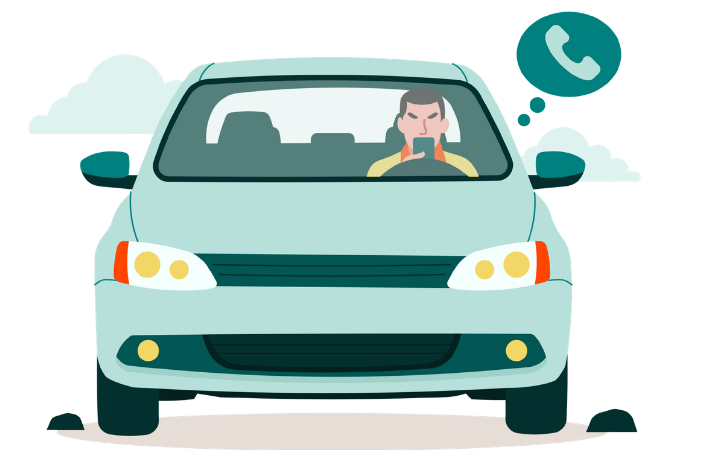
Texting and driving is recognised as an increasingly dangerous activity and is treated as a behavioural risk indicator. If this was a once-off occurrence, this would likely be reflected in the period of disqualification or conviction type. Insurance providers will seek to establish the frequency of offence in order to provide an insurance quote for texting and driving convictions.
Driving without insurance is a serious offence that has an impact not just on the convicted driver but also on anyone whose person or property is damaged by a non-insured driver. A conviction for this offence will have significant consequences for future insurance quotes. Once a full clean licence has been obtained, an insurer will examine the circumstances of your conviction and criminal conviction history. From this, it will be possible to determine the possibility of coverage.
Insurance cover for those convicted of dangerous or reckless driving will face very high penalties for future coverage. Any insurer will attempt to ascertain the facts of the conviction and assess whether it was for a minor or serious offence. A serious offence usually includes injury to a third party. The rate of cover will certainly be higher than for other convictions, such as texting while driving or careless driving.
What Cover Options Are Available After a Conviction?
Drivers who have convictions are able to obtain the same types of “core” cover – third party only, third party fire and theft, and comprehensive – as drivers with no convictions; however, a driver convicted of an offence may be limited in their choice of insurance company and/or type of cover available.
A few insurers may limit certain levels of cover (i.e., less expensive) to drivers convicted of serious offences. A few insurers may increase the level of excess required by convicted drivers, or they may only allow coverage of specific types of vehicles.
Cost Of Convicted Driver Insurance In Ireland
The cost of insurance for a convicted driver will be a lot higher than for a driver with a clean driving record. Premium increases can be substantial, particularly in the first few years following a ban. Additional factors that could further increase the cost include the driver’s age at conviction and at the time of application for insurance, the length of time since the conviction, any reoffending on record and the type of vehicle being insured.
How long do loadings last?
Most insurers apply conviction-related loadings for 3 to 5 years after a ban ends.
Some may apply them for longer, particularly for more serious or repeat offences. The impact depends on severity. Keeping a clean record can improve pricing as time goes on.
Factors that affect the cost of insurance as a convicted driver
Time since conviction, driving history, and recurrence rate will all be considered when assessing costs for convicted driver insurance in Ireland.
What if you are refused insurance?
Even though an insurance provider has refused to insure you, it doesn’t necessarily mean that no other insurer will be able to provide coverage for you. Each insurance provider has its own set of underwriting guidelines and some providers might view your situation as more flexible than others.
Options to consider if you are denied by one insurance provider:
- Using a broker who specialises in non-standard insurance providers.
- Insuring a less powerful vehicle or a lower value vehicle.
- Increasing your voluntary excess (if possible)
Ultimately, you need to make sure to report all convictions fully and accurately. If you don’t do this, your policy may be declared null and void, even if you got coverage at first.
How can I reduce costs when getting insurance as a convicted driver?
Factors that could reduce costs might include a long-lapsed disqualification period, a recorded history of good behaviour and that the insurance request is for a small-engined vehicle.
Convicted Driver FAQ
If you fail to disclose your driving conviction, your insurance policy will be void and no cover will be provided in the case of accident or injury. All criminal convictions must be declared, whether they are for driving or for wider criminal activity. You will be asked to confirm whether you hold or have held any convictions when you are taking out the insurance. It is not possible to simply forget to notify the insurer.
Yes, a convicted driver will have the opportunity to build towards a no-claims bonus over time. As a clean driving record is built up, your no-claims bonus will increase.
Insurer availability depends on the severity and number of convictions. If you have two or more, the likelihood of finding an insurer will be very low.
Yes. In Ireland, you can apply to the District Court for the removal of a disqualification under certain circumstances. You must have served at least half of your disqualification period, and at least two years if it is for a long period. You must give 14 days’ notice to the court and the Gardaí, and you are limited to making one application for removal of a ban in a 10-year period. The factors that will be taken into account will be a history of your character since conviction, your general conduct and whether you have come to the notice of the Gardaí since, the nature of the offence and a measure of the impact it has had on your livelihood so far.
Get a Car Insurance Quote
Takes less than 3 minutes | Secure & Independent
- Comparing quotes from top providers
- Finding affordable coverage for your needs
- Getting advice from licensed experts
- Saving more with exclusive deals