

Fully Comprehensive Insurance Ireland
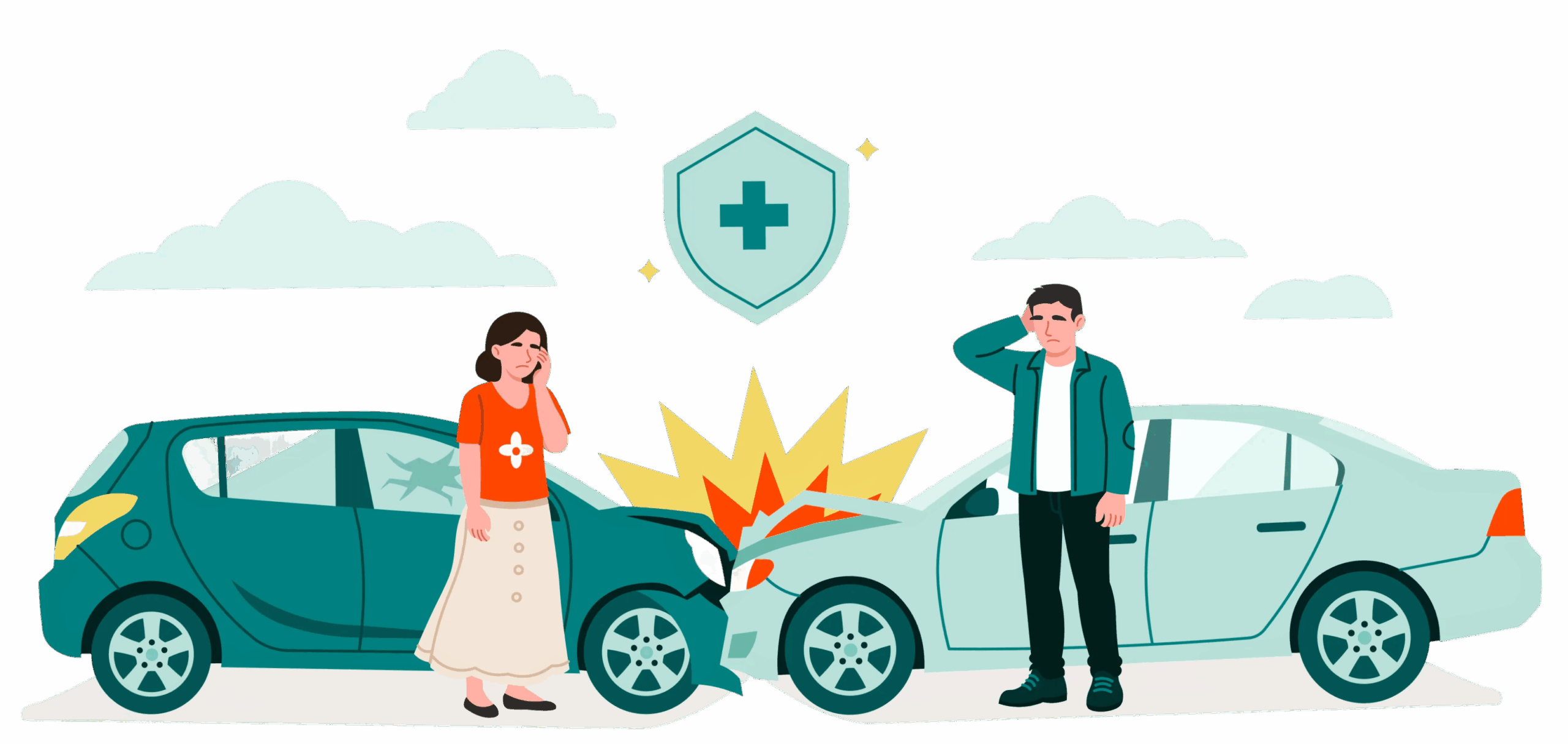
Fully comprehensive car insurance offers the highest protection for you, your vehicle, and other road users.
What Is Comprehensive Car Insurance?
Fully comprehensive car insurance, or “fully comp,” is one of the main types of car insurance for Irish drivers. Unlike other options available on our Car Insurance hub page, comprehensive insurance provides the highest level of protection. It is designed to protect you, your vehicle, and other road users. Comprehensive cover is different from basic insurance in that it protects your vehicle and others, even if you’re at fault in an accident.
It is designed for drivers who want the widest possible protection against damage, theft, and unexpected repair costs.
This guide shows what comprehensive insurance covers, what it usually excludes, and when it’s the best choice compared to other types of insurance.
What Is Covered By Comprehensive Insurance
Accidental Damage: Repair costs for your vehicle after an accident, regardless of fault.
Third-Party Liability: Automatically includes the required third-party liability protection for damage or injury caused to others, offering limits that exceed the legal minimum.
Fire & Theft: Protection if your vehicle is stolen or damaged by fire.
Windscreen Cover: Fix windscreen damage without impacting your ‘No Claims Bonus (NCB)’.
Vandalism: Intentional damage caused to your vehicle by others.
Natural Disasters: Damage caused by, say, a flood, storm or fallen tree.
Fire Brigade Charges: Fire brigade call-out fees charged by the local authority. i.e. extinguishing a car fire or removing people from the vehicle with cutting equipment.
New Car Replacement: If your car is new (typically under 12-24 months) and gets stolen or written off, it might be replaced with the same make and model. Note that your insurer will pay the Market Value (what the car is worth today), not what you paid for it.
Courtesy Car: A temporary replacement vehicle while your car is repaired, often from an approved garage. If your car is stolen, you don’t typically get a courtesy car without a specific car hire add-on.
What Is Typically Not Covered By Comprehensive Insurance
Even with “full cover,” you should expect these standard Irish exclusions:
This includes things like thinning brake pads, tyre punctures, or general engine “tiredness” that happens over time
If your gearbox fails because of age or you skip a service and the engine seizes, insurance won’t pay. It’s for accidents, not repairs.
Putting petrol in a diesel car is a common mistake, but most standard policies won’t cover the engine flush.
If your car is stolen because you left the doors unlocked or the alarm wasn’t set, insurers will likely refuse to pay.
A big one. If you leave your keys in the ignition while de-icing the car or paying for fuel and it’s stolen, you are almost never covered.
While policies cover “personal effects” up to a small limit, they exclude high-value items like laptops, cash, or credit cards.
Insurance covers the car, not your schedule. If a crash causes you to miss a flight or lose a job contract, the insurer won’t compensate you for the consequences.

Key Insight
Be aware that certain driver actions can void claims under a comprehensive insurance policy, such as:
- Driving under the influence.
- Unapproved vehicle modifications that are not disclosed to the insurer.
- Using a vehicle for business or commercial reasons without the right cover is risky. Commuting to one workplace usually falls under standard policies.
- Not having a valid driver number for each named driver on the policy.
- Undisclosed disqualifications can result in policy cancellation.
- Unaccompanied learner drivers were involved in an accident.
- Track days and off-roading.
Cost of Fully Comprehensive Car Insurance
The cost of comprehensive car insurance depends on several factors, including the driver, the vehicle, and how it’s used. Our car insurance cost guide explains these in more detail.
These factors apply across all car insurance policies, but comprehensive policies are typically more sensitive to things like vehicle value, repair costs, and usage.
Age & Experience: Drivers under the age of 25, and over 70s, statistically represent the highest risk on Irish roads. Motorists will typically experience a drop in premiums once they’re over 25 years old with a full license.
Penalty Points: Drivers who have obtained penalty points for speeding, mobile phone use or other offenses will often see higher premiums as a result
No Claims Discount: Drivers can get up to a 75% discount on their car insurance policy premium by building up their No Claims Bonus (NCB) over multiple years. It’s possible to protect your NCB in the event of a claim by purchasing either ‘full’ or ‘step-back’ NCB protection as an add-on.
Grouping: Many insurers ‘group’ the make and model of the car and, based on the assigned group (from 1-50), offer a higher or lower premium to the driver. Cars in the higher groups may include high performance cars or premium models that come with a higher replacement and/or repair cost as well as a higher risk of theft.
Age: The older the car, the greater the cost of insurance. Older cars tend to come with a greater risk of mechanical failure and often lack the safety and security features found in modern models.
Fuel: Electric vehicles (EVs) often come with higher insurance premiums due to the specialised and expensive nature of EV battery repairs.
Modifications: Non-standard alterations made to the vehicle, such as alloy wheels or spoilers, must be declared to the insurer and can increase the premium.
Eircode – urban areas, such as Dublin and Limerick, tend to attract higher premiums than rural counties due to higher instances of theft and collisions
Parking – on-street parking comes with a higher risk of theft than, say, parking in a locked garage or private driveway
Mileage – the more you drive, the higher the probability of an accident
Usage – whether the vehicle is being put to use for business purposes or for pleasure, with the former attracting a higher premium
Voluntary Excess: Choosing a higher excess (i.e. more ‘skin in the game’) will often lower the premium of the insurance policy because you are taking on more financial risk.
Named Drivers: Adding experienced drivers to the policy, such as a parent, can lower a younger driver’s premium.
Telematics: Commonly referred to as ‘black box insurance’, installing a device to monitor your driving behaviour can result in a lower premium.
Car Insurance Market Pricing Comparison (2026)
- Quotes obtained January 2026
- Same assumptions across insurers
- No optional extras selected unless stated
- All prices are annual prices.
| Insurer | Driver 1* | Driver 2* | Driver 3* |
|---|---|---|---|
| Allianz | €519.74, €300 excess, breakdown assistance, windscreen cover, stepback bonus protection. | €678.06, €300 excess, breakdown assistance, windscreen cover, stepback bonus protection. | €1553.16, excess €300, breakdown assistance, windscreen cover, stepback bonus protection. |
| Zurich | €611.70, €250 excess, breakdown assistance, windscreen cover, courtesy car, stepback bonus protection. | €916.78, €260 excess, breakdown assistance, windscreen cover, courtesy car, stepback bonus protection. | €1179.82, €250 excess, breakdown assistance, windscreen cover, courtesy car, stepback bonus protection. |
| AXA | €675.09, €300 excess, breakdown assistance, windscreen cover, courtesy car, stepback bonus protection. | €908.81, €300 excess, breakdown assistance, windscreen cover, courtesy car, stepback bonus protection. | €873.50, €300 excess, breakdown assistance, windscreen cover, courtesy car, stepback bonus protection. |
| KennCo | €701.21, €250 excess, breakdown assistance, windscreen cover, courtesy car, stepback bonus protection. | €863.19, €250 excess, breakdown assistance, windscreen cover, courtesy car, stepback bonus protection | €898.58, €500 excess, breakdown assistance, windscreen cover, courtesy car, stepback no claims bonus protection. |
| Aviva | €1006.82, €300 excess, breakdown assistance, windscreen cover, courtesy car, stepback bonus protection. |
*Driver 1 – Age 45, full Irish licence for 9yrs+, no penalty points, driving 1.2L petrol car worth €12,000.
*Driver 2 – Age 45, full Irish licence for 9yrs+, no penalty points, driving 1.6L petrol hybrid car worth €30,000.
*Driver 3 – Age 22, full Irish licence for 4yrs, no penalty points, driving 1.2L petrol car worth €12,000.
Comprehensive Car Insurance Add-Ons
Most insurers let you buy extras or add-ons to enhance your comprehensive car insurance. Some of these may come standard in a comprehensive policy from an insurer, but others might need to be bought separately.
They include:
Step-Back No Claims Discount (NCD) Protection – If you make a claim, your NCD will go down a bit, for example, from 5 years to 2 or 3 years. It won’t be lost completely.
Full No Claims Discount (NCD) Protection – lets you make one or two claims in three years without losing your NCD. So, if you have five years of NCD, you keep it.
Breakdown Assistance – helps with roadside repairs or tows your car to a garage if it breaks down.
Home Start Assistance – helps if your car won’t start while parked at home.
Driving Other Cars (DOC) – allows you to drive other people’s cars when you have their permission to do so. DOC is mostly third-party only (TPO) cover, even on a comprehensive policy. But, comprehensive DOC might be available in some cases.
Open Driving – allows any driver, typically aged between 25-70, with a full licence to drive your car without needing to be specifically listed on your insurance policy.
Legal Expenses Cover – pays for a solicitor to help recover uninsured losses. This includes costs like the policy excess or lost earnings if a third party is at fault.
Enhanced Personal Accident Cover – boosts the payout for you or your spouse if you die or suffer a serious permanent injury from a car accident.
Medical Expenses Cover – offers increased coverage for immediate medical costs for the driver and passengers after an accident.
Enhanced Personal Belongings Cover – boosts the coverage limit for personal items stolen or damaged in your vehicle.
Misfuelling Cover – covers the cost to drain and clean your fuel tank and engine if you accidentally use the wrong fuel in your car.
Replacement Lock Cover – covers the cost of replacing your car’s locks, keys, and electronic fobs if your keys are stolen.
EV Wall Charger Cover – protects your home charging unit and cables from accidental damage, fire, or theft.
Car Hire Extension – provides a rental car for a set period if your car is stolen or written off.
Benefits of Comprehensive Car Insurance Over Third Party
Total Loss Payout
The biggest advantage of comprehensive car insurance compared to third-party, fire and theft (TPFT) or standard third-party only (TPO) insurance is the total loss or ‘write-off’ payout. If you only have TPFT, or lower, and you crash your car, you’ll get nothing. But, with ‘fully comp’, the insurer will pay the market value of the vehicle (not what you paid for it) minus your excess.
Uninsured Driver Promise
The other key benefit of comprehensive cover is the ‘Uninsured Driver Promise’. Many comprehensive policies state that if an uninsured driver hits you, the insurer will pay for your repairs. You won’t lose your No Claims Bonus. TPO and TPFT drivers must contact the Motor Insurers’ Bureau of Ireland (MIBI), which takes longer.
Additionally, TPFT does not usually provide windscreen cover or courtesy cars in the event of your vehicle being sent for repair following an accident.
Comprehensive Car Insurance For Young Drivers
For young Irish drivers, aged 17 to 24, comprehensive car insurance is usually the best way to safeguard their first car. This is because younger drivers are more likely to write off a vehicle. New drivers usually choose this type of cover to protect the vehicle itself. This is common when the cost of replacement would be difficult to absorb after an accident.
Other Types Of Car Insurance
If comprehensive cover isn’t right for you, there are other types of car insurance options available in Ireland.
Types Of Vehicles Insured By Comprehensive Insurance
The types of vehicles typically insured by comprehensive insurance include:
- 1Private vehicles.
- 2Vintage or classic vehicles (note that an “Agreed Value” may be set with the insurer on a vintage vehicle from the outset to prevent future undervaluation).
- 3Commercial vehicles.
Comprehensive Car Insurance FAQ
For a written-off vehicle, it can take between 14-21 days after the assessor has inspected the car.
No, comprehensive car insurance doesn’t cover you for everything. There are specific ‘exclusions’ under a given policy where a claim would not be accepted. Furthermore, most standard comprehensive policies have options for ‘add-ons’ or extras to expand the scope of cover i.e. breakdown assistance, no claims bonus protection, open drive and more.
Not automatically. Most Irish insurers will allow you to purchase a ‘Driving Other Cars’ add-on that will allow you to drive other vehicles with coverage. However, this additional coverage is typically third-party only which means that, in the event of a crash, damage to the car you’re driving wouldn’t be covered if the accident was your fault.
A car is deemed by an insurer to be “written-off” where the repair costs exceed a specified percentage of the car’s market value, typically 60-70%.
Get a Car Insurance Quote
Takes less than 3 minutes | Secure & Independent
- Comparing quotes from top providers
- Finding affordable coverage for your needs
- Getting advice from licensed experts
- Saving more with exclusive deals