
Home Insurance 

Compare Cover and Protect Your Home Today

  • Affordable protection for your home
  • Find competitive home insurance quotes
  • Trusted Irish Providers

Whether you are a homeowner, rent, or have a second home, home insurance offers essential protection for what may be your most significant asset.

Having home insurance means that you won’t face large bills should your home or possessions be damaged or destroyed in a storm, fire, or burglary.

Home insurance may not be a legal requirement, unless your mortgage lender requires you to have buildings insurance in place to protect their investment.

Types of Home Insurance

There are three primary types of cover available as home insurance.

Buildings Cover

Buildings insurance is designed to insure the structure of your house, including walls, roof, floors, windows, and the permanent fittings to the house that do not move i.e., kitchen, bathroom. It protects the physical building against risks such as fire, storm damage, and escape of water.

Contents Cover

Contents insurance covers your personal possessions such as furniture, appliances, electronics, jewellery, and clothing. This type of cover may also protect your belongings outside the home on an ‘all risks’ basis.

Combined Home Insurance Policies

This is often the most cost effective type of home insurance for owner occupiers as it protects both the structure of the home and everything inside it.

Choose Cover That Fits Your Situation

Home insurance products tend to be tailored to different types of property owners and occupiers, depending on your specific living situation.

Homeowners

If you own your own house, or currently have a mortgage, then a combined home insurance policy will protect your asset, the building you live in, and your belongings. Your mortgage lender will likely require you to have buildings cover as a minimum.

Landlords & Property Owners

If you are a landlord, or have a buy to let property, and rent your property to tenants, you will want to protect your investment, certain contents, as well as owner liabilities.

Learn more about landlord insurance →

Tenants

If you rent your home, your landlord is responsible for insuring the building, but your own belongings will not be covered by their policy. Tenant insurance protects your contents and may include personal liability cover.

Learn more about tenants insurance →

Holiday & Second Home Owners

If your summer house or second home is left vacant for long periods, this is covered by the specific protection offered by holiday home insurance. Insurers assess second homes differently due to occupancy patterns and risk exposure.

Learn more about holiday home insurance →

What affects the cost of home insurance?

The average cost of a combined home insurance policy in Ireland in 2026 has been estimated at between €400 and €600. However, this may be an underestimation, given the price increases seen in home insurance in recent years.

According to recent data from the Central Statistics Office (CSO), home insurance premiums saw an increase of approximately 7.5% between 2024 and 2025. This has been attributed to cost of living increases in the cost of building materials to an increase in weather events.

Factors that affect the cost of home insurance

There are numerous factors that contribute to the overall cost of home insurance for consumers:

The rebuild value of your home is the chief factor that determines the cost of your home insurance if you are a homeowner or a landlord. 

Your property type and size, number of bedrooms and bathrooms etc. will all contribute to the ‘rebuild cost’ of your property, i.e. how much it would cost to completely rebuild your house if it was destroyed.

This figure is different to the ‘market value’ of your home which is its value if you were to sell the property.

Other factors also affect the premium you pay for your home insurance. The location and address of the property can determine risks such as flooding, or crime rates. 

Your home security measures such as window and door locks and having an alarm fitted will positively impact your premium.

Some good news on the cost of home insurance though, as the Insurance Compensation Fund (ICF) levy, originally intended to ensure solvency of insurance companies following the financial crash, is to be reduced from 2% to 1% in January 2026.

Ways To Reduce Your Home Insurance Premium

There are numerous ways to pay less for home insurance without compromising on essential financial protection.

Improving your home’s security will potentially lower your premium and, as smart home tech systems are more widely adopted there is potential to improve home security further, and even incorporate early warning systems such as water leak and fire detection.

If you are a careful home owner, you will potentially decrease your premiums significantly by building up a no claims discount.

Your excess is the amount that you contribute towards a claim on your home insurance. Increasing your excess, say from €250 to €500, can reduce your premium.

If you pay for your home insurance annually, rather than monthly, you will often save in the region of 15- 20% less on your premium.

You may get a discount on your home insurance buy purchasing multiple policies, such as home and holiday home insurance, or home and car insurance, from the same insurer.

Although the Central Bank has banned the practice of ‘price walking’ since 2022, meaning that insurance companies are no longer allowed to charge existing customers higher prices than new customers for the same cover, it is still worth shopping around to take advantage of the best that the market has to offer.

What Does Home Insurance Cover?

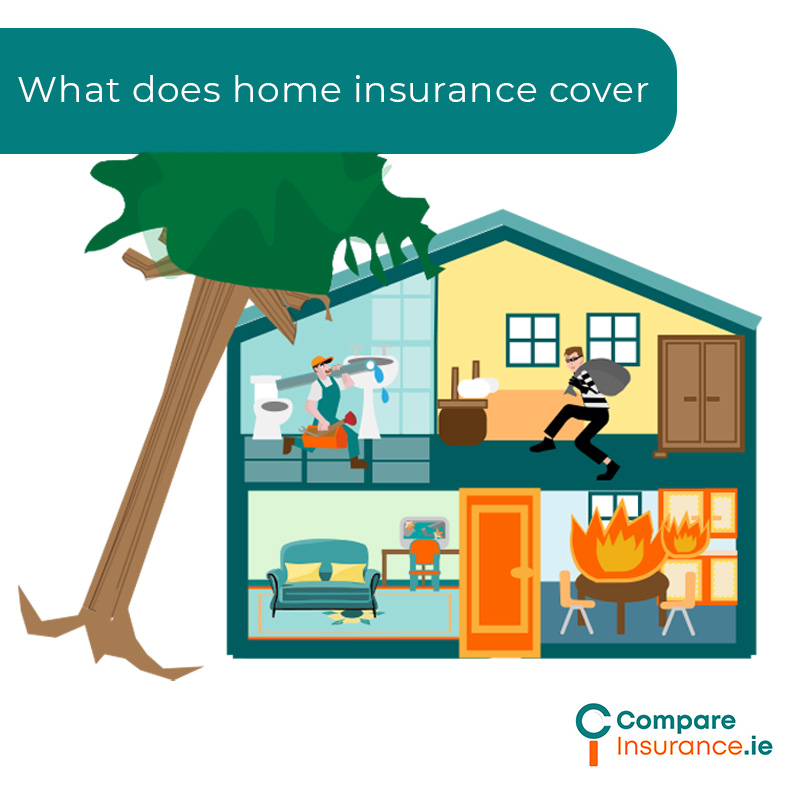
Home insurance in Ireland generally covers ‘perils’ which are unforeseen events that can cause damage to your home.

This typically includes standard cover for:

  • Fire, smoke, and explosions.
  • Weather, storm, and flood damage – although some areas of the country are excluded from cover for flooding.
  • Theft or vandalism.
  • Subsidence or ground movement – again, in some areas home insurance will not cover subsidence.
  • Escape of water/ oil – internal leaks from burst pipes or leaking tanks.
  • Public liability cover.
  • Home emergency assistance – a 24/7 service to provide assistance and temporary repairs, and to ensure the security of your home following an insured event e.g. a break-in.

In addition you can usually purchase additional cover that protects against:

  • Accidental damage to your home or its contents.
  • All risks cover for jewellery, laptops, or sporting equipment that is used outside the home.
  • Specific cover for high value items.

Things to Consider When Insuring Your Home

Not all homes fit a cookie cutter standard construction, and here are some things to be aware of when you are purchasing home insurance.

It is assumed by an insurer that your home is well maintained, therefore damage due to wear and tear or poor maintenance, such as leaking gutters, will not be covered by home insurance.

If your home is left unoccupied for more than 30 days, although policies vary on this number, you will need to inform your insurer as you may not be covered by standard home insurance. 

Holiday home insurance has specific security conditions as it is assumed that a second home will be empty for parts of the year.

If your home is over 100 years old, has a flat roof, is a protected structure or listed building, or is a timber framed or eco home, then you may need to arrange non-standard home insurance.

If you run a home business, such as a childminding business or home salon, you may need to discuss this with your home insurer.

It is also assumed in the case of standard home insurance that the home is the primary residence of you and your immediate family only.

If you are purchasing home insurance for the first time, some insurers offer specialised first time buyer home insurance products available for you.

Who Provides Home Insurance in Ireland?

AXA - Home Insurance
Zurich - Home Insurance
Allianz - Home Insurance
FBD - Home Insurance
123 insurance provider
AIG - Home Insurance

Learn More About Home Insurance

Home insurance is a complex product and the consequences of getting it wrong can be disastrous and leave you heavily out of pocket.

Compare Insurance is committed to helping you to get it right when it comes to home insurance, providing you with quotes for comparison, and providing you with a wealth of up to date information and articles so that you can make an informed choice when it comes to home insurance.

Check out our pages on all the different types of home insurance, including homeowner’s insurance, renter’s insurance, landlords insurance, holiday home insurance, self build insurance, even mobile home insurance.

You can also access advice on home insurance that is more specific such as non- standard home insurance or unoccupied home insurance.

Home Insurance FAQ

Usually no, not in the way that motor insurance is legally mandatory. If you have a mortgage your lender is legally obliged to ensure that you have buildings cover in place at a minimum to protect their investment.

However, your home and its contents are usually your most significant asset and protecting them with home insurance is strongly recommended.

Generally yes, your insurance company will pay out if your home is damaged by storms, erosion, or a natural disaster. 

Damage by vehicle collision, including an aeroplane is also covered by most policies, however war or terrorism is not usually covered.

In terms of buildings cover, you must ensure that you are covered by the full ‘rebuild’ cost of your home which is the full price for rebuilding the property from scratch. 

Underinsurance occurs when the amount specified by your buildings cover is insufficient for the rebuild cost. In this case, the condition of average means that if your house is 25% underinsured, then the insurer will only pay out 75% of any claim, not just claims for a full rebuild.

You can determine the rebuild cost of your home by using the calculator on the Society of Chartered Surveyors of Ireland (SCSI) website, or have a full survey carried out on your home.

Limited accidental damage balances protection and cost by limiting accidental damage cover to higher value items only such as damage to fixed bathroom or kitchen fittings, or electronic equipment such as TVs, laptops, and entertainment systems.

Yes, and short term rental activity may not be covered by your standard home insurance. Although AirBnB may offer some protection for their hosts, you would be fully protected for property damage and third party liability with more specialised short term rental insurance.

Compare Insurance for home insurance

Compare Insurance can help you to and provides loads of information and insight into how different home insurers approach cover, pricing, and protection.

Browse our information on different types of home insurance and compare house insurance policies and providers.